CAE Fatigue: Make the impossible possible

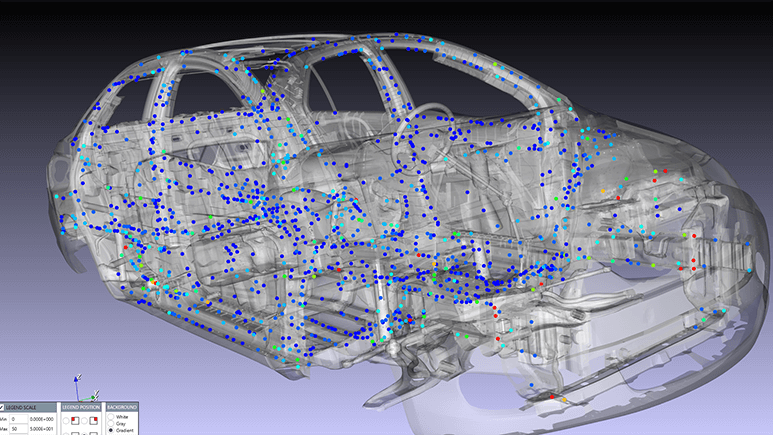
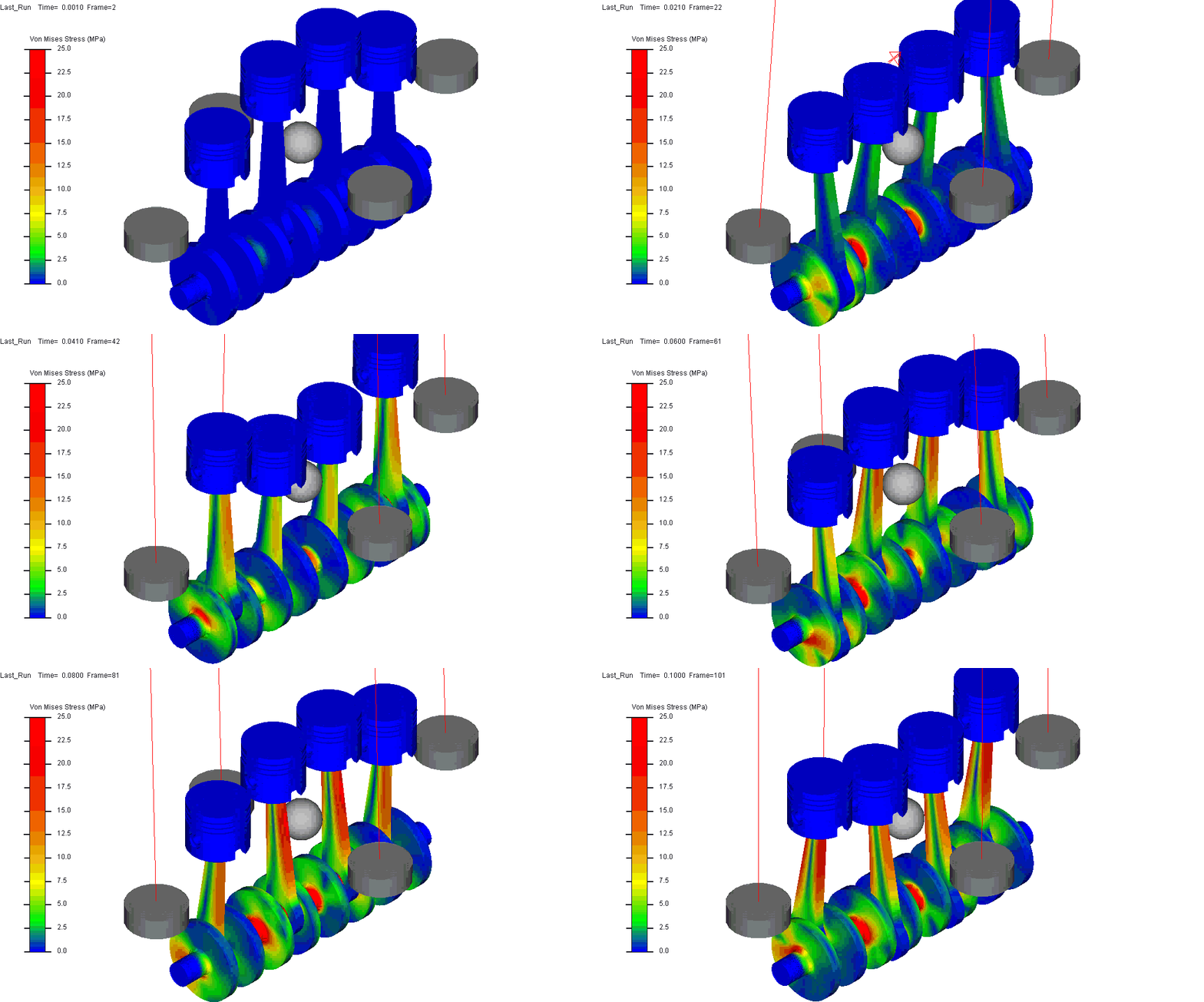
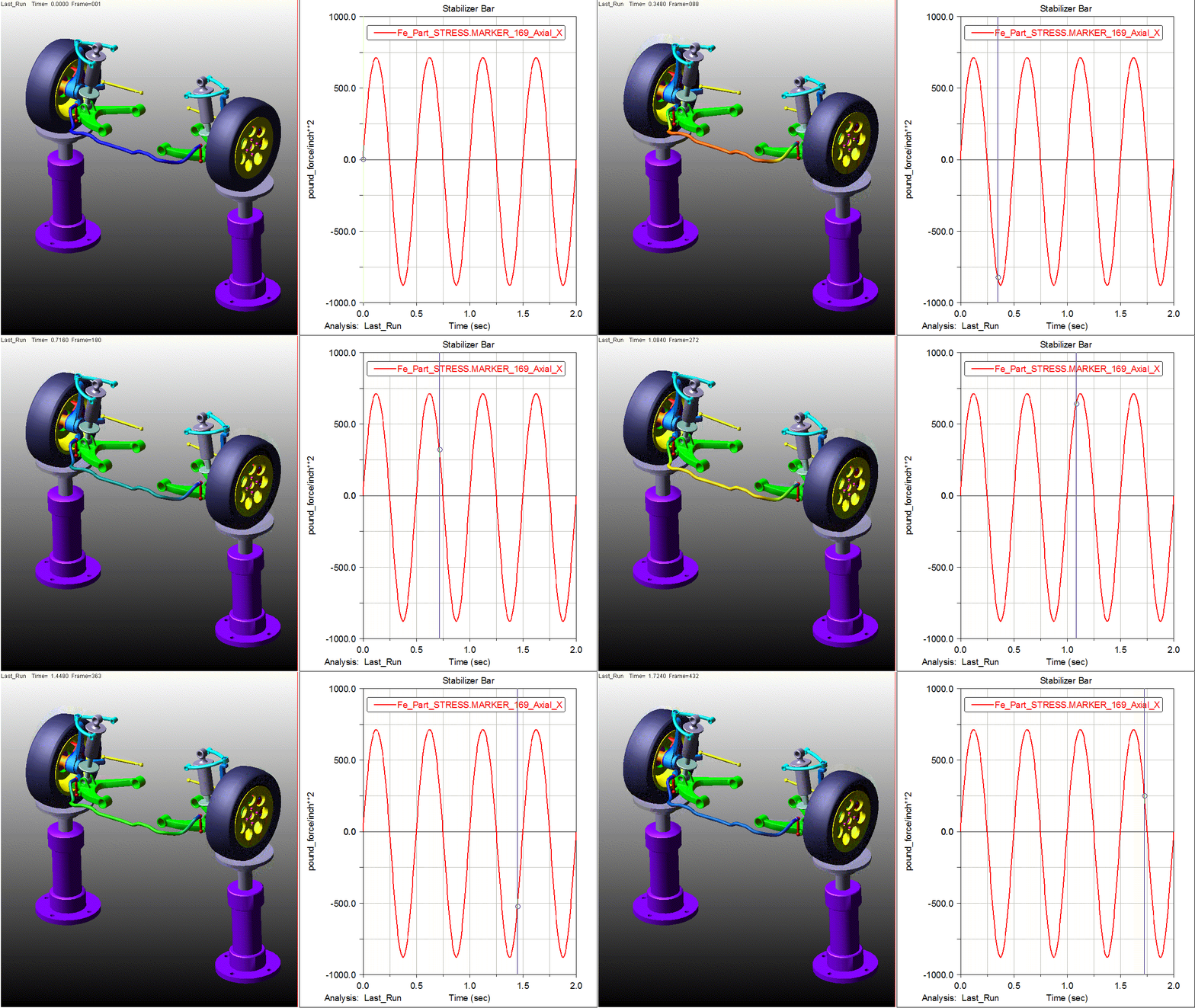
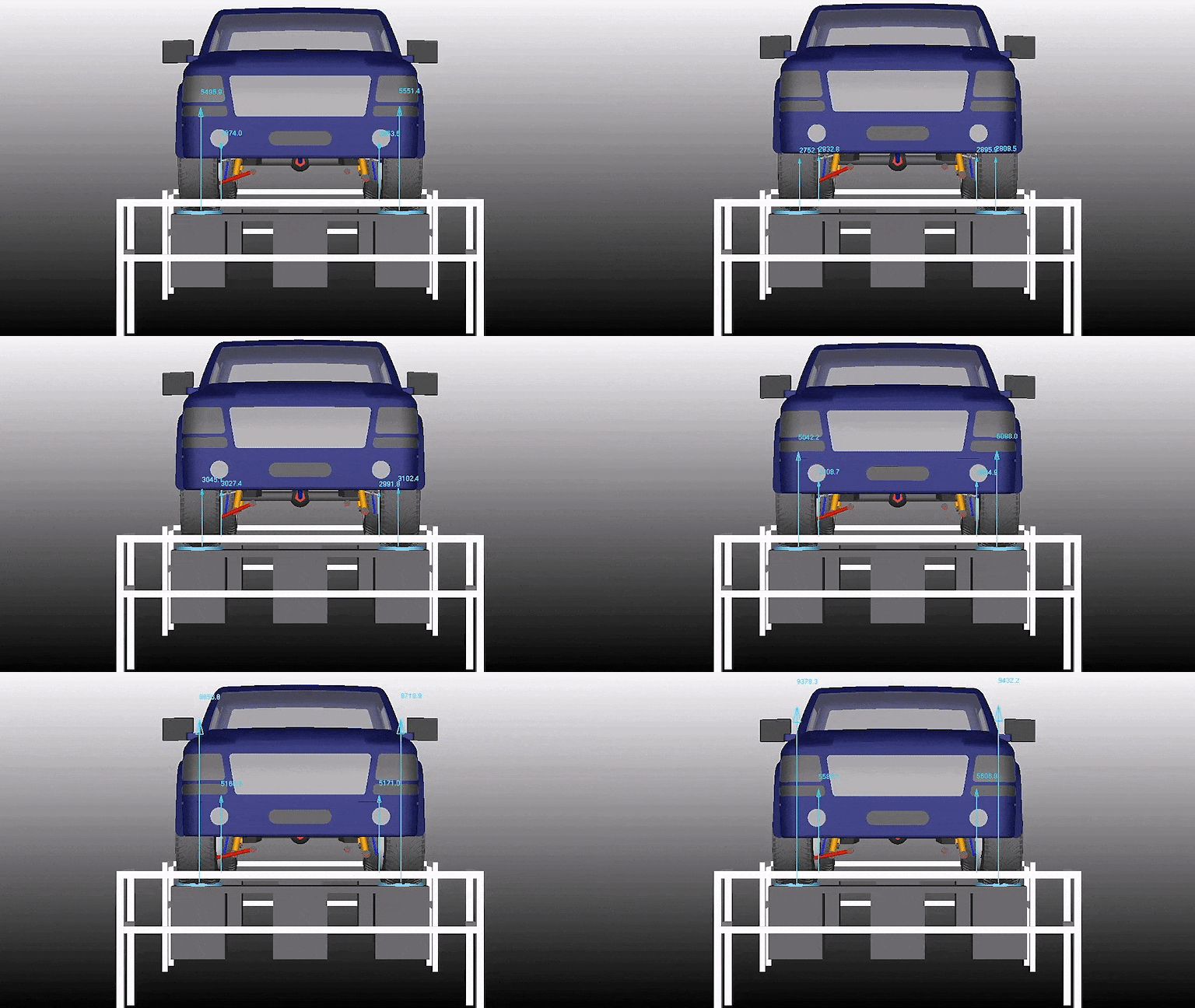
CAE Fatigue provides unique capabilities for optimizing designs based on durability criteria. As a result, engineers can perform precise fatigue failure analysis of structures under prolonged exposure to time-varying loads. Furthermore, MSC Fatigue delivers specialized design and optimization capabilities, including durability requirements for product life under normal and experimental operating conditions.
CAE Fatigue (MSC Fatigue) is built on decades of theoretical and experimental research by MSC Software and nCode International Ltd., providing a robust, well-validated foundation for structural fatigue analysis. Fatigue life and service life analysis draws on finite element results from MSC Nastran or Marc, or on experimental data and material fatigue characteristics.
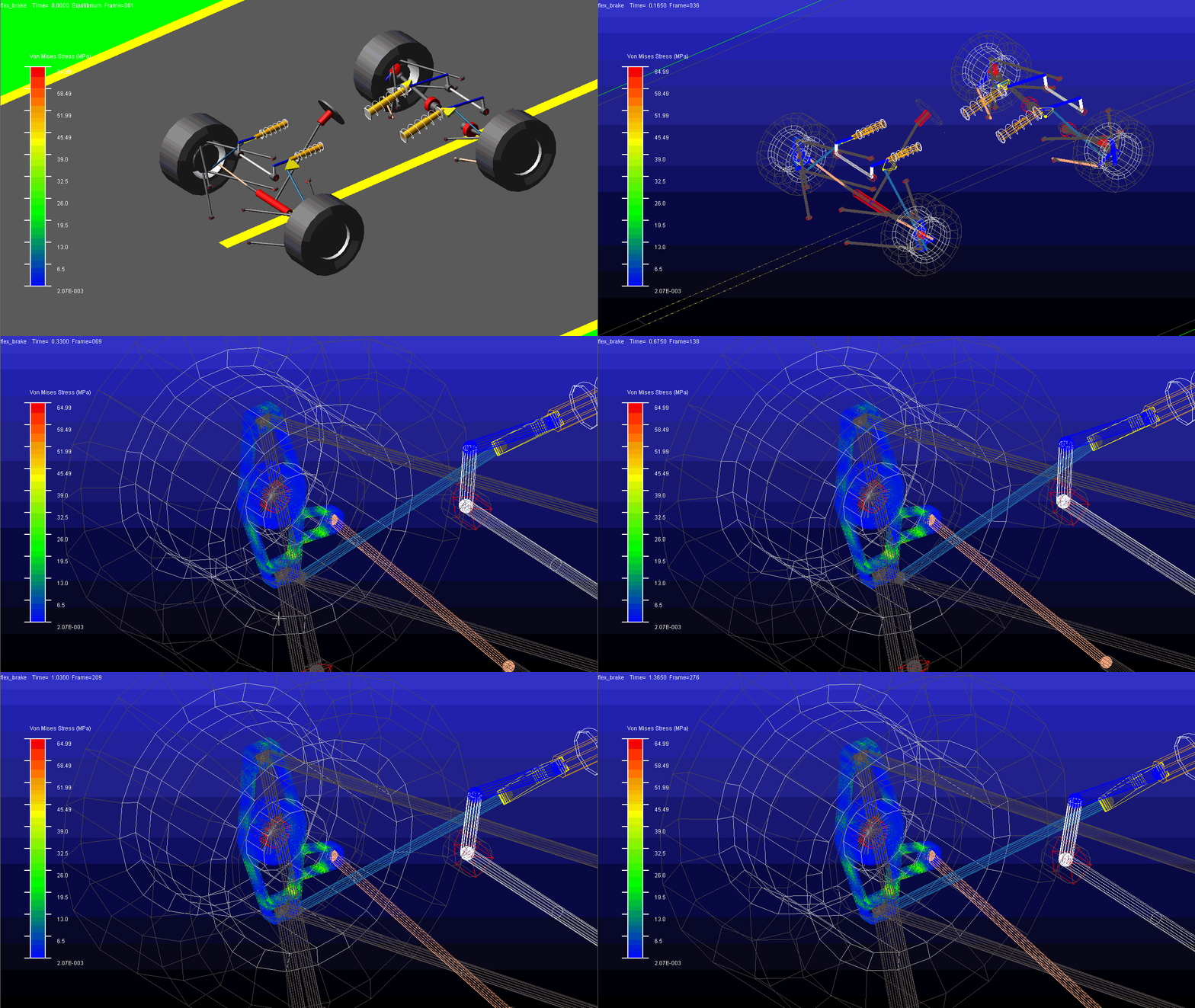
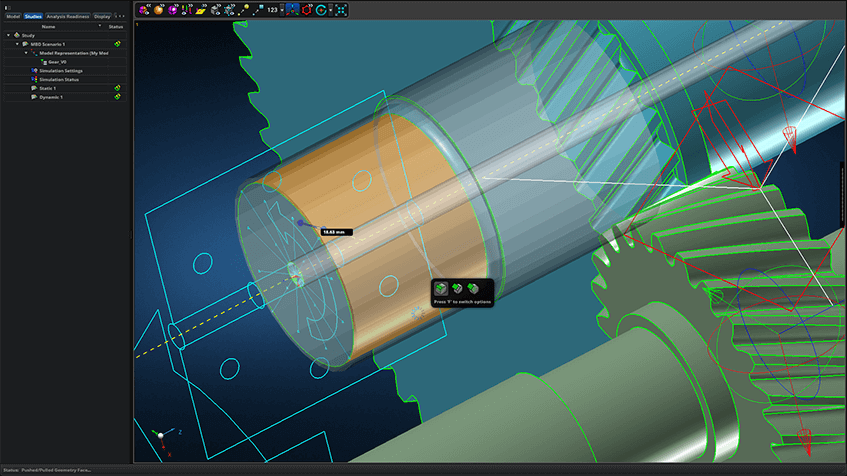
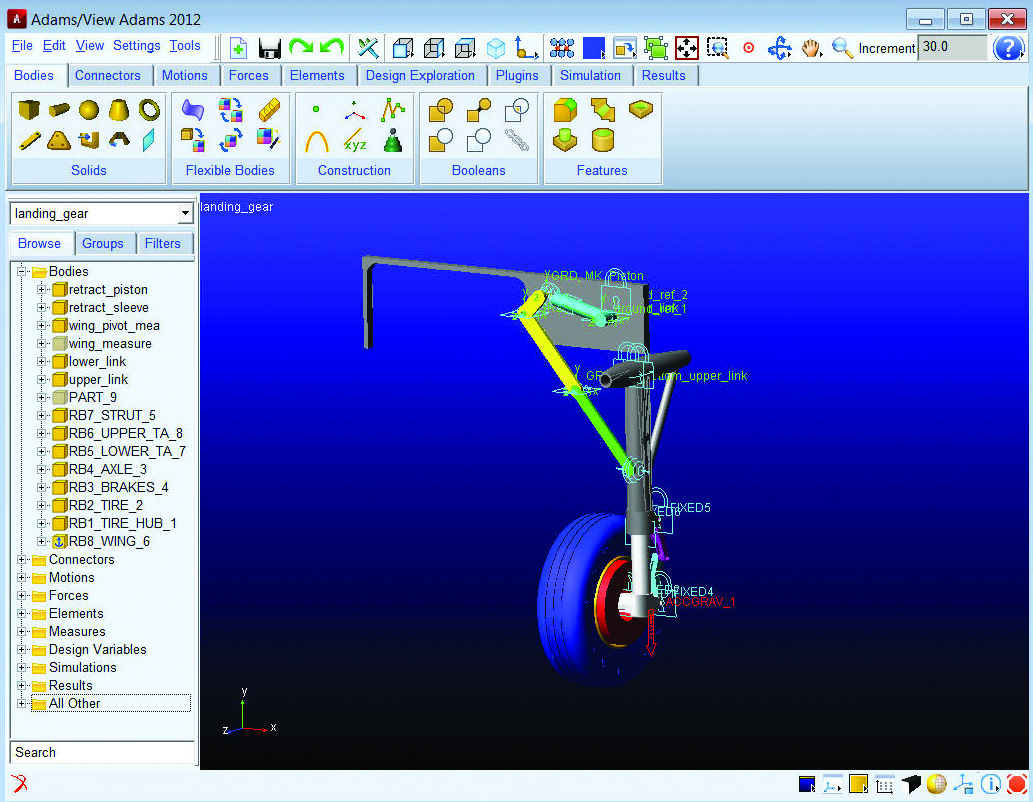
Patran serves as the single integrated environment for endurance analysis. Engineers load previous FE results or experimental data, define loading histories and material properties, control the solution, and visualise results — all within one workflow. Analysis can run in the time or frequency domain.
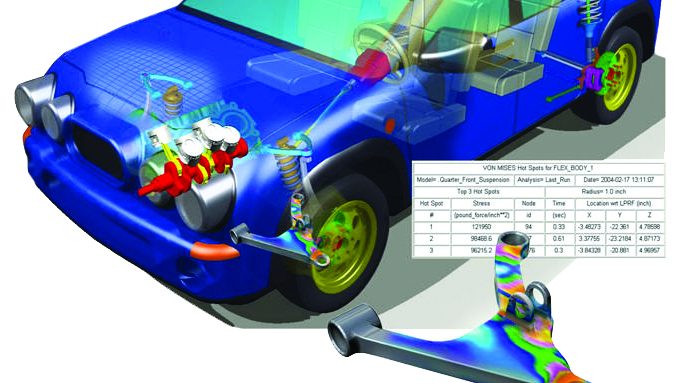
Stress Life examines the total lifetime of a structure without separating crack initiation from crack growth phases. A Wöhler (S-N) curve defines the relationship between stress amplitude and cycles to failure. This method applies when deformation is predominantly linear and plastic deformation is highly localised — typically for high-cycle fatigue above 50,000–100,000 cycles. It also supports durability analysis of spot and seam welds, and includes the FatigueWheels module for rotating structures such as wheels and discs.
Strain Life analysis determines the time to crack initiation of structurally significant dimensions. It uses cyclic material curves and fatigue curves in strain versus cycles-to-failure space. This method suits structures with medium levels of plastic deformation — ideal for low-cycle fatigue analysis up to 100,000 cycles. In multicyclic calculations, cycles with large hysteresis loops dominate the fatigue damage. The MSC Fatigue rainflow cycle-counting algorithm delivers accurate crack initiation damage calculations.
Fatigue Fracture tracks crack development to specified or destructive dimensions. Users define the initial crack size as an input parameter. CAE Fatigue applies the fatigue fracture diagram in crack growth rate versus stress intensity factor range coordinates, drawing correction functions from its built-in library. The effective stress intensity factor drives the calculation and accounts for:
CAE Fatigue includes more than 50 service utility procedures, each running from within Patran or as a standalone tool. These utilities provide signal import, filtering, display options, and broad capabilities for processing analysis results at every stage of structural durability assessment.
CAE Fatigue reduces product development time by identifying fatigue damage and fracture risks early in the design process, and enables engineers to analyse the effects of in-service damage on design life.
You can request a trial version of the full CAE Fatigue software package. The trial includes a technical demonstration focused on your specific design and manufacturing requirements.
YOUR ENGINEERING PARTNER IN THE MIDDLE EAST
© 2015 – 2022 GloBAS Distribution. All rights reserved.
Please, fill in the form below.
By leaving a request, you agree to the personal data processing policy